- October 05, 2026
- Industrial Perlite
Keeping a storage tank cold and improving the insulation in a historic building are very different jobs. Yet perlite insulation has a place in both. Depending on the application, it can surround a refrigerated vessel, form part of an interior insulation panel, or be incorporated into plaster applied to existing masonry.
At Norcal Perlite, we want to help you understand where perlite fits and what makes it useful. Looking at established applications brings that into focus: what needs insulating, where the perlite goes, and how it works with the surrounding construction.
Filling Insulation Spaces Around Storage Tanks
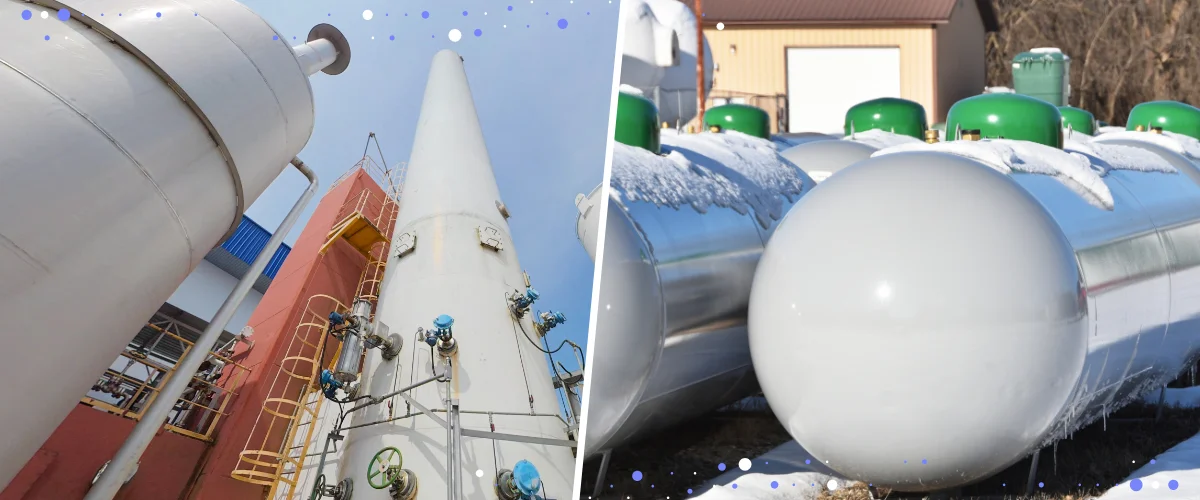
Expanded perlite can fill the annular space in certain double-walled storage tanks to help reduce heat gain.
For a tank holding refrigerated liquids, insulation has an important job: slowing the heat that moves inward from the warmer surroundings. Expanded perlite can help by filling the space between the inner vessel and the outer shell in certain double-walled tank designs.
That gap is called the annular space. It provides a protected cavity for loose perlite to surround the inner vessel without coming into contact with the stored liquid. The vessel holds the contents, while the perlite adds an insulating layer that helps reduce heat gain.
This is a useful distinction when considering perlite for industrial insulation. The material works within the tank’s construction, not independently of it, and the complete design determines how the system performs. The storage examples below show where perlite has been used in this role, from historical rocket propellant storage to refrigerated propane tanks.
NASA Propellant Storage
NASA’s published account of liquid hydrogen storage describes Apollo- and Space Shuttle-era ground storage tanks with vacuum jackets and approximately three feet of perlite insulation. Perlite was part of the system used to slow heat gain around cryogenic rocket propellants.
Refrigerated Propane Storage
A published installation for the Ridley Island Propane Export Terminal records perlite being poured into the propane tank’s annular space. Blanket insulation was also installed, making this a great example of perlite being used alongside other components in an industrial insulation system.
Adding Interior Insulation to Historic Masonry

Perlite insulation panels can improve thermal performance from the inside while helping preserve a historic building’s exterior.
Improving a historic building’s insulation does not have to mean changing the exterior that gives it character. When the original facade needs to stay intact, the work can move indoors. Perlite insulation panels have been used on the inside of existing masonry walls to improve thermal performance without covering the building’s exterior.
Unlike the loose perlite used around storage tanks, these panels are fitted against a prepared wall surface. A leveling layer, adhesive, and interior finish connect the insulation to the existing construction. The aim is to make those layers work together, rather than treating the insulation as an addition that performs on its own.
Villa Castelli Renovation
The Historic Building Energy Retrofit for Villa Castelli documents perlite panels installed on the interior of stone and brick walls. Preserving the historic exterior was a central requirement. They also describe moisture-transport analysis and detailed junction design, showing that the perlite layer was evaluated as part of the complete wall system.
Incorporating Perlite Into Insulating Plaster
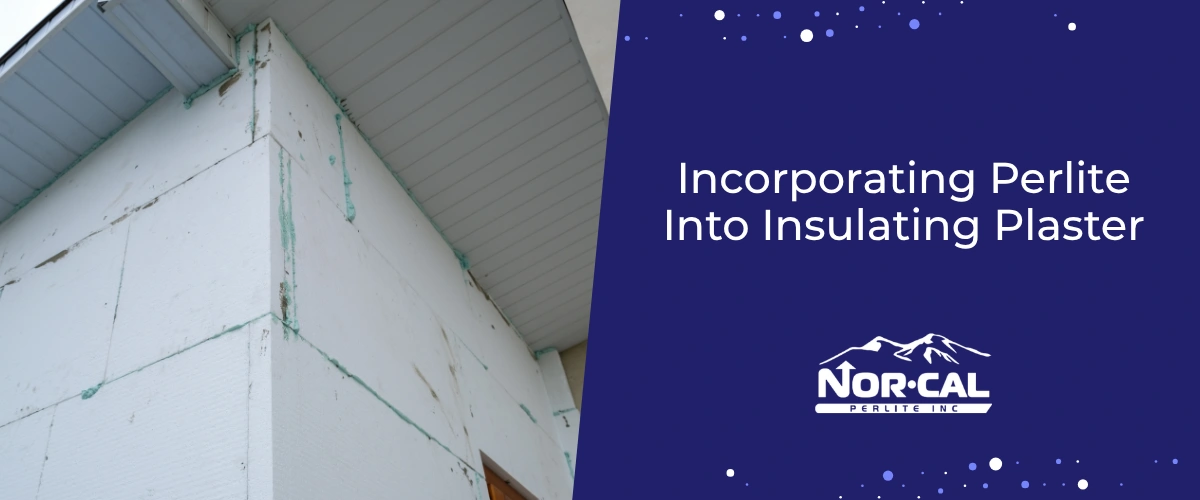
Expanded perlite can be combined with binders and other ingredients to create lightweight insulating plaster for building applications.
Perlite can also become part of the plaster applied to a wall. In perlite insulating plaster, expanded perlite is combined with a binder and other ingredients to create a lightweight mixture with insulating properties. Instead of occupying a cavity or forming a separate panel, the mineral becomes part of an applied wall layer.
This offers another way to incorporate perlite into building work. When we discuss this application, the distinction between the raw ingredient and the finished material matters. A bag of expanded perlite is not ready-to-apply plaster. The formulation, surface preparation, and installed thickness all influence how the finished layer performs. The renovation example below puts that use into context.
The Widum in San Genesio Renovation
The Historic Building Energy Retrofit for the Widum in Jenesien, also known as San Genesio, records an internal insulating plaster based on perlite. It was applied to existing stone masonry in a variable-thickness layer to improve thermal performance without changing the building’s exterior appearance. Unlike the panel installation at Villa Castelli, this application used perlite within a plaster layer.
Understanding Perlite’s Role Within the Insulation System
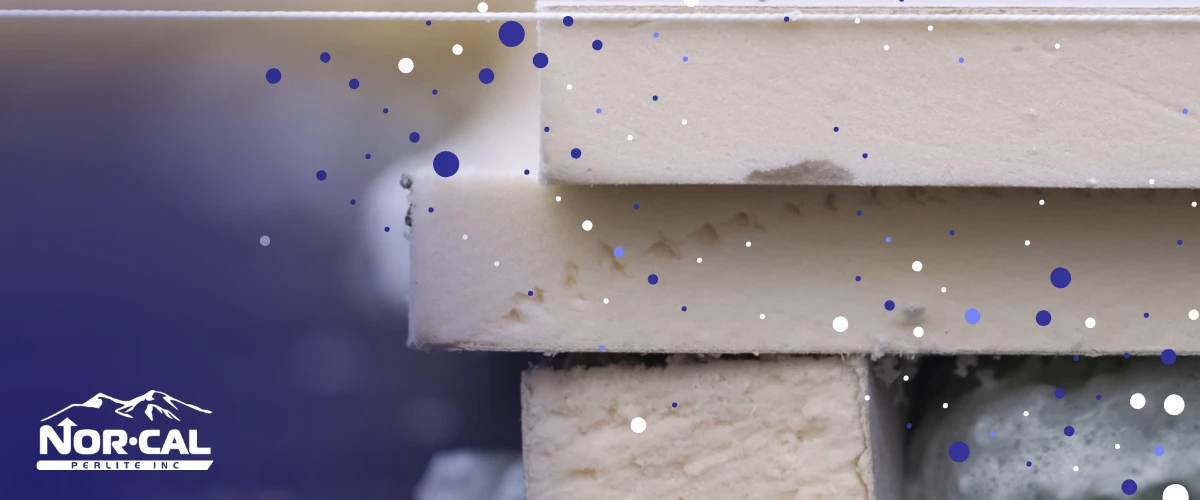
Perlite insulation can serve different roles within engineered systems, including loose fill, interior panels, and insulating plaster.
A storage tank and a historic masonry wall have very different insulation needs. The examples in this article show how perlite insulation can fit into both, whether as loose fill, an interior panel, or an ingredient in insulating plaster.
At Norcal Perlite, we share these applications to help you understand the possibilities and ask informed questions about your own material needs. To connect these examples with a fuller understanding of perlite for insulation, explore our perlite insulation guide for thermal building systems. It takes a closer look at our perlite’s insulating properties and its role in construction and industrial applications.
Let’s Talk About Your Perlite Supply Needs
Whether you are researching materials or preparing a bulk order, we’re here to help with the supply questions. Share your intended application, any specifications from your project team, the estimated quantity, and your delivery location. We’ll discuss product options, availability, and the practical details of getting perlite to you.
Contact our team to start the conversation, call (510) 232-7337, or email info@norcalperlite.com with your project requirements.
Perlite Insulation Applications: Frequently Asked Questions
1. Why is perlite used in cryogenic storage tank insulation?
Expanded perlite helps limit heat entering tanks that hold extremely cold liquids. In many double-walled designs, it fills the annular space, the gap between the inner vessel and outer shell. This creates an insulating layer around the stored contents, although performance depends on the complete tank design rather than perlite alone.
2. Can perlite insulation be added without changing a historic building’s exterior?
Yes, perlite insulation panels have been installed on the interior of existing masonry walls to preserve a building’s exterior appearance. The Villa Castelli renovation used this approach on stone and brick walls. Its design also considered moisture movement and wall connections, demonstrating why internal insulation must be evaluated as part of the complete building assembly.
3. What is the difference between loose-fill perlite and perlite insulating plaster?
Loose-fill perlite consists of expanded particles placed within a suitable enclosed insulation space. Perlite insulating plaster combines the mineral with binders and other ingredients to form a layer applied to a prepared surface. Both incorporate perlite, but their composition, installation methods, and finished properties differ, so they are not interchangeable.